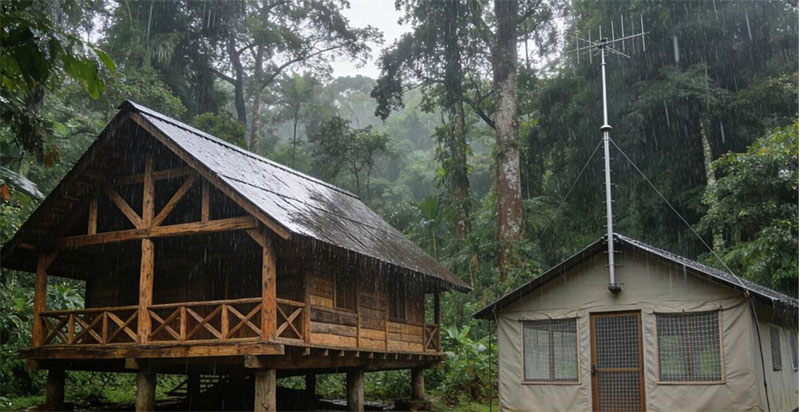
Ⅰ.North Africa
- Climate features: Predominantly tropical desert climate, hot and dry, with large temperature differences between day and night and scarce precipitation.
2.Temporary housing adaptation: It should have extremely strong insulation properties. It is recommended to use light-colored reflective building materials (such as color-coated steel plates), and equip with an efficient ventilation system and shading structures. The temporary accommodation sites should also consider rapid construction and wind-proof design.
3. Key features of permanent residences: Thick walls (such as adobe walls) + Flat roof design for heat storage, courtyard layout for wind collection, some areas using cellar-style buildings for cooling; Sand-proof nets installed on doors and windows.
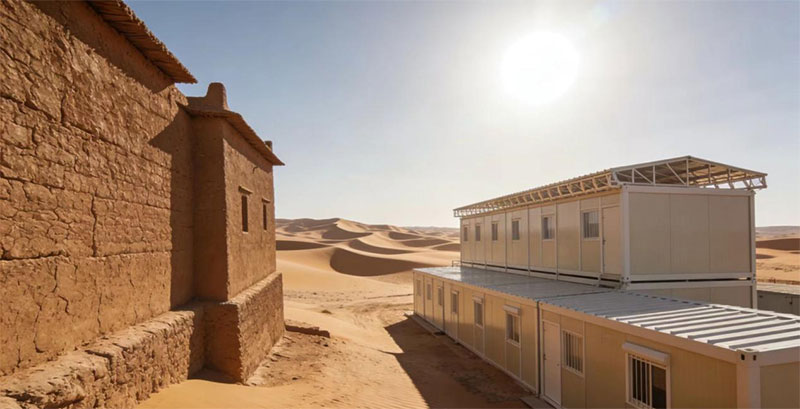
Ⅱ.East Africa
- Climate characteristics: The dominant climate type is tropical grassland climate, with distinct dry and wet seasons. The rainy season is characterized by heavy rainfall, while the dry season is hot. Some highland areas have a mild climate.
2. Temporary building adaptation: During the rainy season, special attention should be paid to waterproofing (including pitched roofs and waterproofing membranes), and detachable flooring should prevent moisture from seeping back into the floor; during the dry season, shading and natural ventilation should be emphasized, and a triangular roof structure with drainage is recommended.
3. Key features of permanent residences: mixed wood and stone structure (ant-rodent resistant), thatched roof with drainage, elevated foundation for moisture prevention; residences in plateau areas need to consider heat preservation (such as double-pane windows).
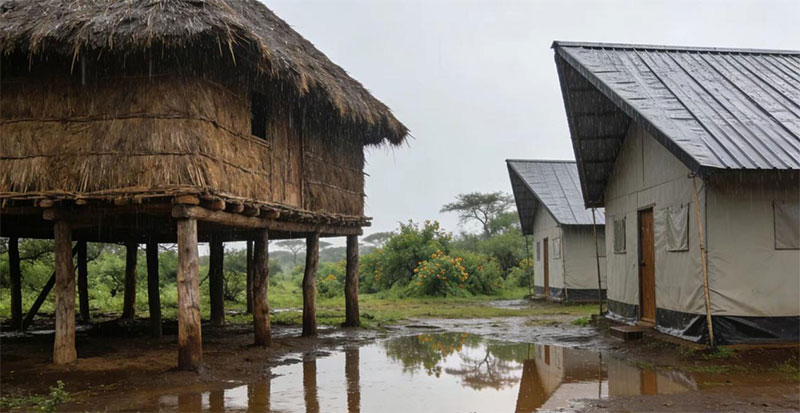
Ⅲ.West Africa
1.Climate characteristics: A combination of tropical rainforest and tropical savanna climates, with high temperatures and high humidity. The rainy season is long and there are many hurricanes (along the coast of the Gulf of Guinea).
2.Temporary building adaptation: The buildings are made of fully steel structure for wind resistance, and the roof is made of high-density polyethylene to prevent typhoons. Windows are installed on the walls to enhance air circulation; the temporary campsite needs to be raised by more than 30 cm above the ground to prevent moisture.
3.Key points for permanent residences: Lightweight building materials (palm leaf roofs, bamboo frames) have quick heat dissipation; elevated bamboo houses are moisture-proof; large spacing between houses ensures good ventilation; residences in coastal areas need to be resistant to salt fog corrosion.
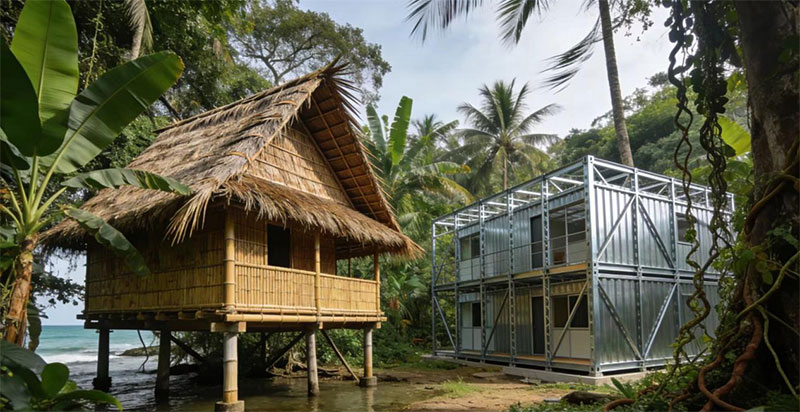
ⅣSouthern Africa
1.Climate characteristics: Mediterranean climate (along the southern coast), tropical savanna climate (in the interior), mild and rainy winters, hot and dry summers, with frost in some areas.
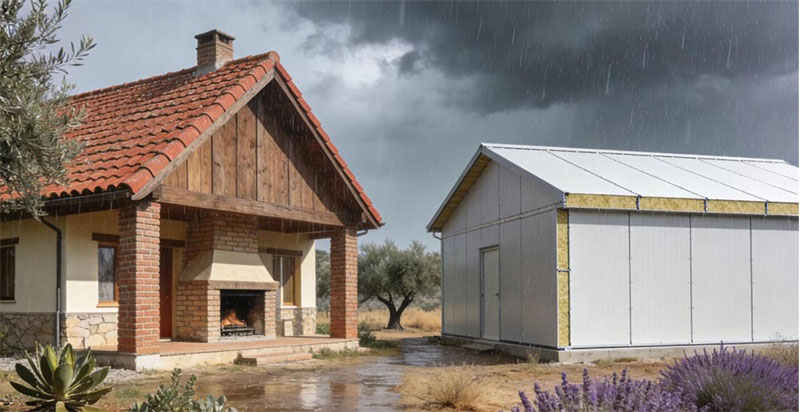
2.Temporary building adaptation: In summer, it needs to be able to provide insulation and ventilation; in winter, it needs to be able to retain heat (such as using rock wool sandwich panels). For the southern coastal area, consideration should be given to salt spray protection; the temporary warehouse needs to take into account both rainproofing and dry storage of goods.
3. Key features of permanent residences: mainly brick and wood construction, sloping roof (with tiles for drainage), fireplace or underfloor heating system (in high-altitude areas); in the southern coastal areas, stone buildings are used to resist sea wind erosion.
Ⅴ.Central Africa
- Climate characteristics: Tropical rainforest climate, with high temperatures and high humidity throughout the year, abundant precipitation, frequent strong convective weather, and dense mosquitoes.
2.Temporary building adaptation: The design features a fully enclosed insect-proof net, hardened ground with drainage ditches to prevent water accumulation, anti-mildew building materials (such as stainless steel frames), and lightning rods installed on the roof to protect against lightning strikes.3.Key features of permanent residence: Timber structure (local hardwood), steep roof slope (metal roofing) for drainage, elevated foundation to prevent moisture, and mosquito-repellent plants (such as citronella) planted around the house.